Akraberg stands at the southern tip of Suðuroy, five kilometres beyond the village of Sumba, at the edge of some of the most treacherous waters in the North Atlantic. The sea here is notorious — a tangle of rocky skerries, powerful currents, and unpredictable weather. The name itself derives from akur, the Faroese word for cereal field, a reminder that people have worked this land for centuries.
This is the story of the lighthouse, the families who kept it, and the place it has become.

c. 1040 — 1350
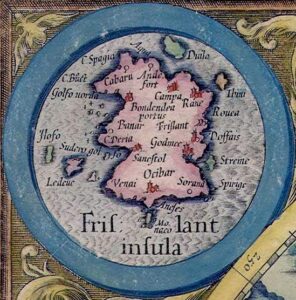
Long before the lighthouse, this headland was inhabited by settlers from Frisia — the coastal lands stretching across what is now northern Netherlands and Germany. According to Faroese folk songs and legend, a Frisian colony occupied Akraberg for over three centuries, from around 1040 until the Black Death swept through the islands around 1350.
The Frisians were said to have been a stubborn and independent people. Long after the rest of the Faroe Islands had been Christianised, they remained heathen, and the old songs tell of them partly living by piracy — raiding from this defensible, sea-girt promontory at the very edge of the known world.
When plague arrived in the Faroes around 1349–1350, nearly all of the colony perished. The man who endured is known in the old tales simply as Bóndin í Akrabergi — the Farmer of Akraberg. He and his small surviving household eventually left the headland and settled in the nearby village of Sumba, where they converted to Christianity and were absorbed into the local community.
To this day, the people of Sumba claim descent from these Frisian settlers. The name Akraberg itself — from the Old Norse akur, a cereal field — is thought to reflect the agricultural life they brought to this windswept cape.
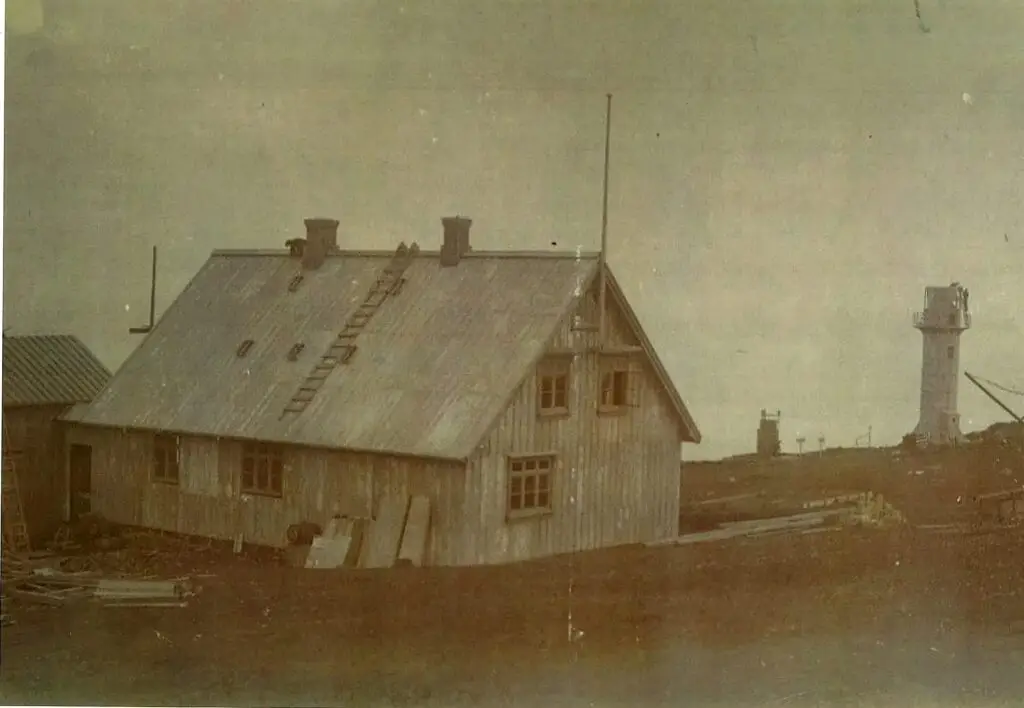
1909
A lighthouse is built
For centuries, the waters south of Akraberg were among the most feared in the North Atlantic. A tangle of rocky skerries lay just beneath the surface, and the meeting of currents created conditions that could swallow a ship without warning. In 1884, the situation worsened when the top of Munkurin — a great rock that seafarers had used as a landmark for generations — crashed into the sea.
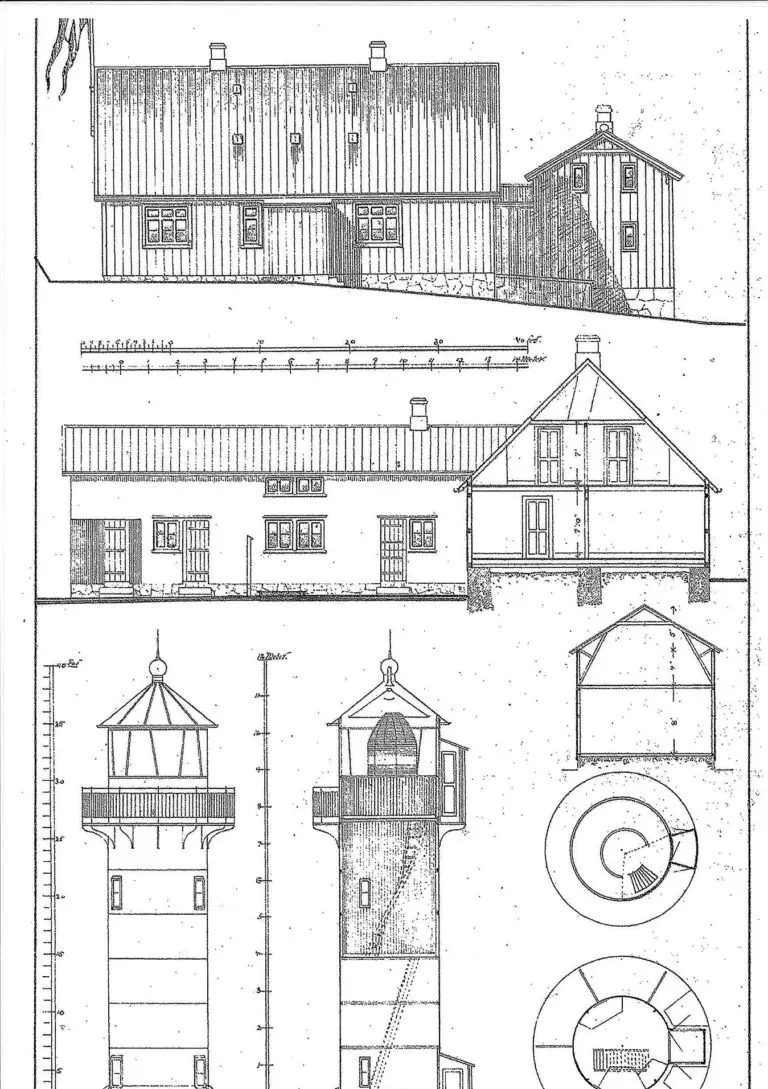
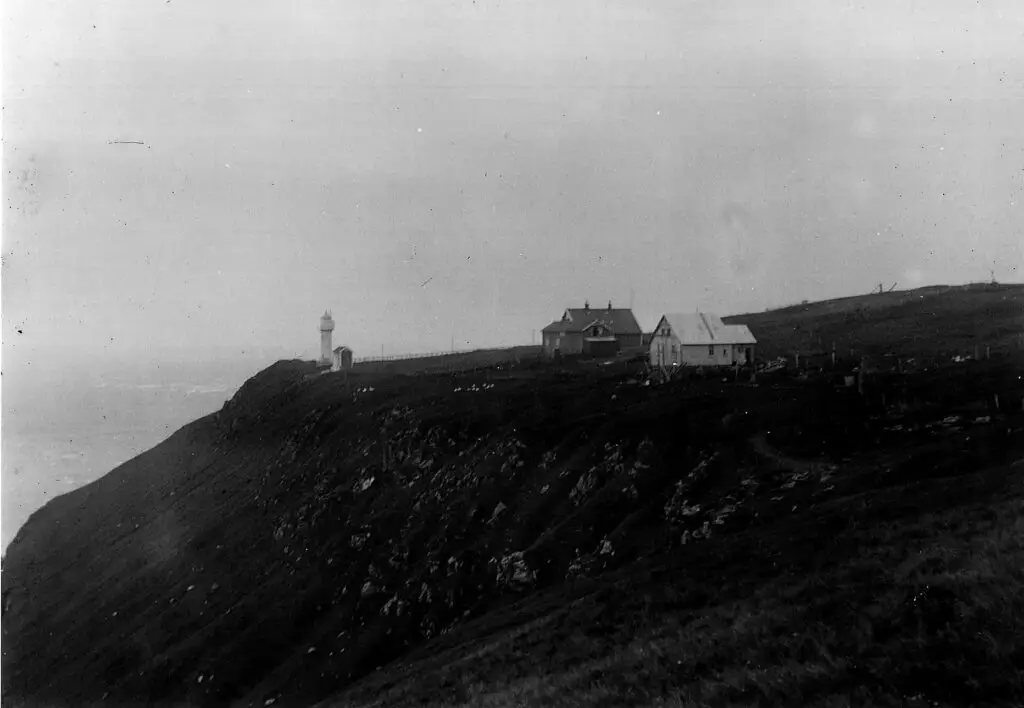
In 1909, a lighthouse was built at Akraberg. The tower, 14 metres tall and cast in iron, stands on a concrete base. Its light sits at 94 metres above sea level and reaches 20 nautical miles out to sea. To withstand the extraordinary forces on this exposed headland, the tower was fitted with steel guy wires — an unusual measure that speaks to the conditions it was built to endure.
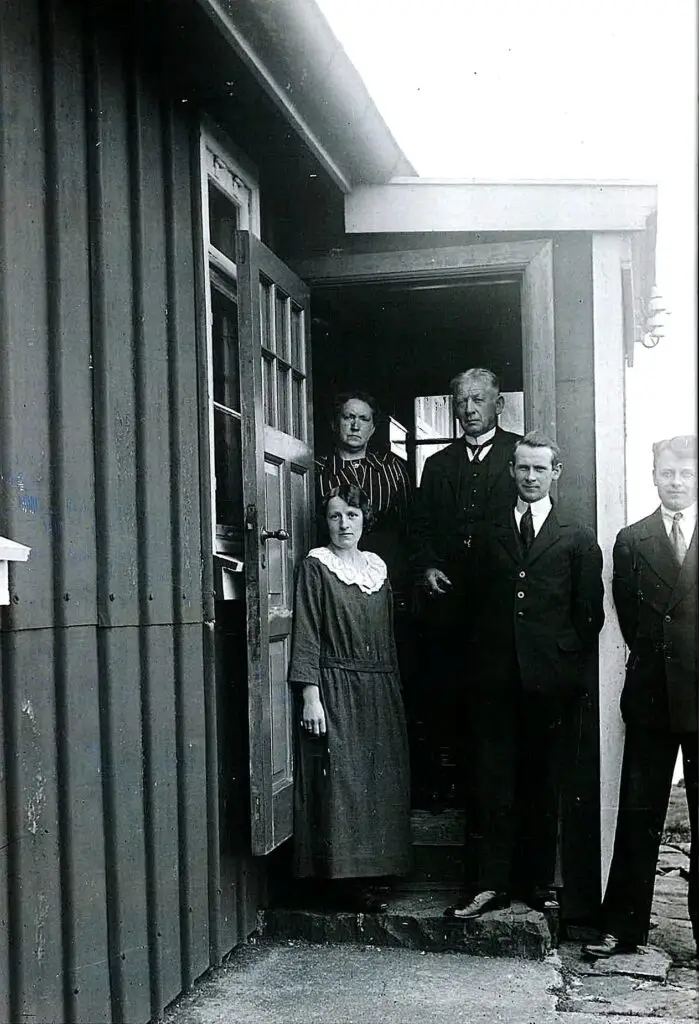
Alongside the lighthouse, houses were constructed for the keeper and his assistants and their families. A small permanent community took root at what was then the southernmost inhabited point of the Faroe Islands.
Early 20th century
Life at the edge
For decades, lighthouse keepers and their families made Akraberg their home. Life here was shaped entirely by the landscape — the Atlantic on three sides, the wind that never really stopped, the grass that had to be worked and animals that had to be tended.
The keepers were responsible for maintaining the light and the fog horn, keeping records of passing vessels, and reporting on weather conditions. Their families grew their own food, kept the houses, and raised children in one of the most remote settings in the Faroe Islands.
It was an isolated existence — but also a privileged one. They had the whole of the southern ocean to themselves.
1940–1945
War comes to Akraberg
During the Second World War, Akraberg took on an unexpected strategic importance. British Royal Air Force personnel were stationed here, operating one of the first radar stations in the region. From this headland they scanned the sea and sky to the south, tracking the movement of ships and aircraft across some of the most contested waters of the Atlantic.
The concrete buildings they constructed still stand on the headland today — low, reinforced structures built to last, now weathered into the landscape. They are a quiet reminder that this remote place once sat at the edge of a much larger world.
The light still burns. On clear nights it sweeps out across the ocean — the same arc it has traced since 1909, the same light that has guided ships past the rocks and skerries of the southern Faroe Islands for more than a century.